.png)
.svg)


Introducing Organizational Memory: Give AI your company context
Build shared company context in Marvin, so Ask AI can connect what customers say with how your organization thinks and works.


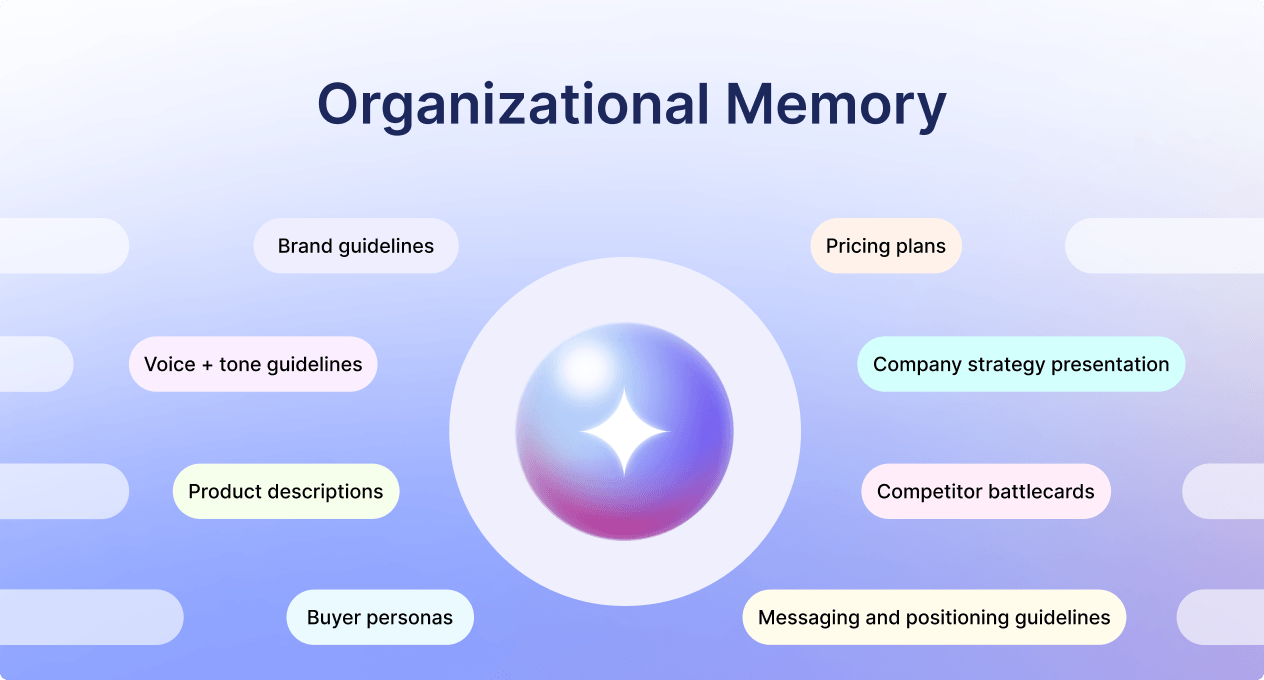
AI is only as useful as the context it has
AI gets better with context. The more it understands about your customers, your products, your market, and the way your company works, the more useful its answers become.
This is one of the reasons we built Marvin in the first place. Customer knowledge is often scattered across interviews, surveys, support tickets, sales calls, research reports, CRM records, people’s minds, and countless other places. Marvin brings that information together so teams can ask questions across it, find the moments that matter, and build a deeper understanding of their customers over time.
But customer context is only part of what makes an answer useful.
When you ask, "What are the biggest opportunities to improve onboarding?" the answer depends on more than what customers said. It also depends on which customers matter most to your business, what your product is trying to accomplish, how you define activation, and what your team has already decided not to prioritize.
When you ask Marvin to turn customer interviews into a messaging brief, it helps to understand your positioning, your competitors, the terminology your company uses, and how your brand communicates.
Until now, much of that context has had to be added manually. You could explain it in your prompt or attach another document every time, or assume the person asking already knew enough to fill in the gaps.
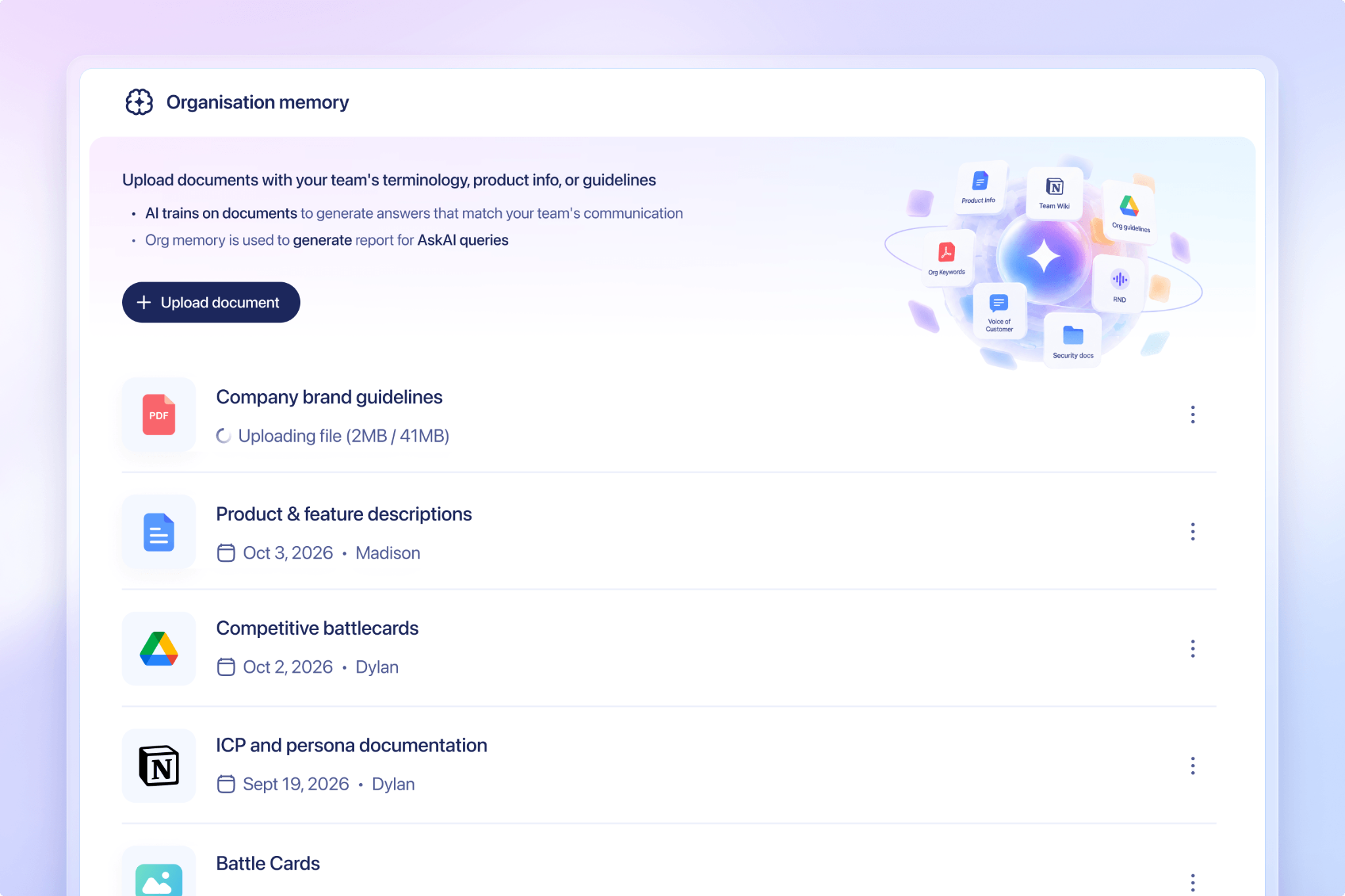
Today, we're introducing Organizational Memory, a new way to give Marvin shared context about your company so Ask AI can understand your business alongside your customers.
One shared memory for every team
Organizational Memory gives admins one place to add the knowledge that explains how your company works. That includes terminology such as product names, acronyms, and internal definitions, product information like feature documentation, help articles, and roadmaps, goals and priorities, processes and standards, positioning and brand, and any broader documentation your organization is comfortable making available.
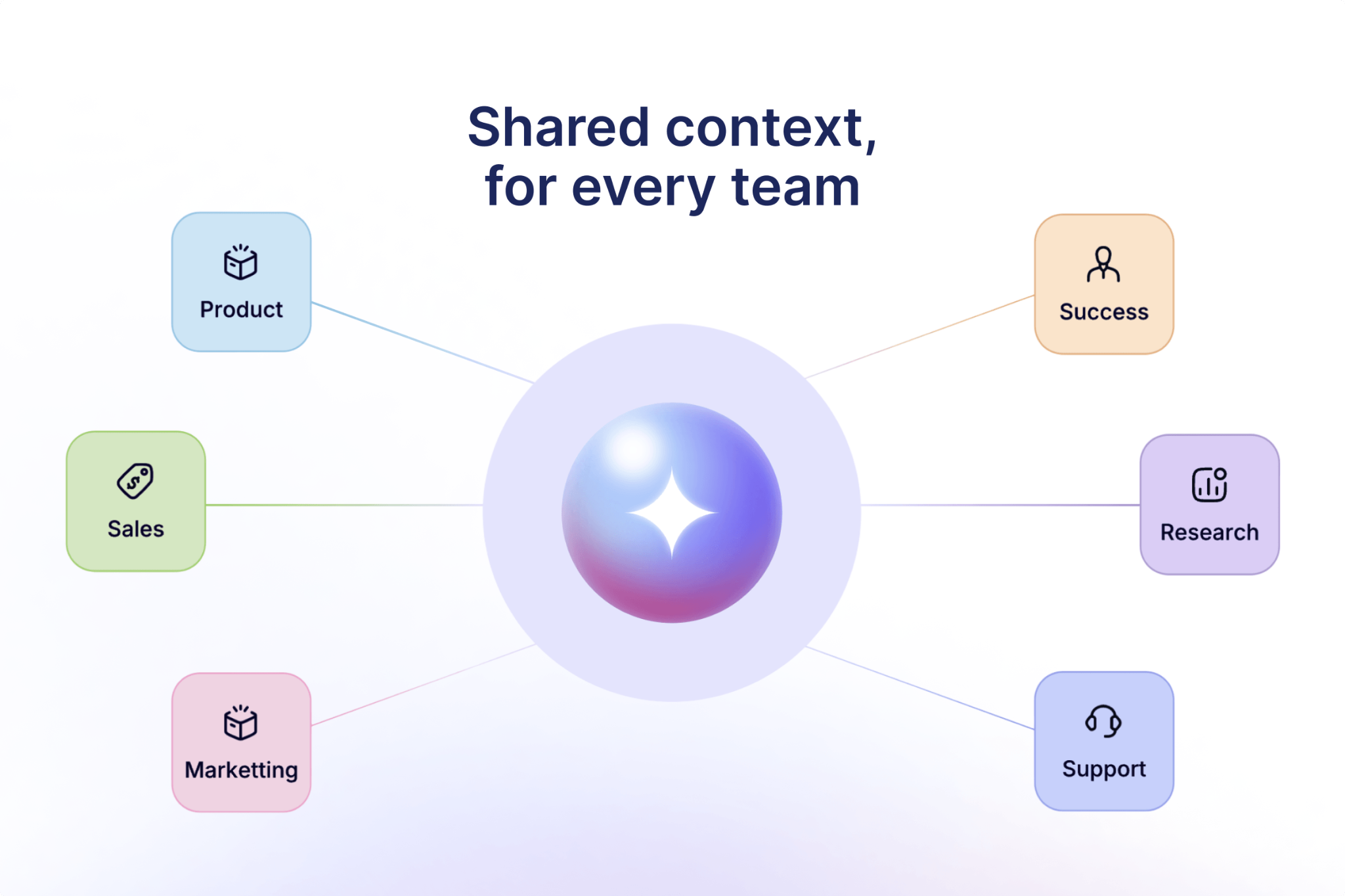
Once it's added, it's shared across the workspace. Research, product, marketing, customer success, leadership, and more can all ask Ask AI questions with the same understanding of your company, and nobody has to start a prompt by re-explaining the basics. Admins keep it current as products evolve, positioning changes, and goals shift.
Beyond saving your team's time, what this gives Ask AI is a better foundation for reasoning about what your customers are telling you and what it means for your business.
For teams thinking about AI knowledge management, this means company knowledge becomes useful in the same place they're already exploring customer research and feedback.
Bring both sides of the story into Ask AI
Company context 🤝 customer feedback.
Say you're trying to understand why customers are struggling with a new feature. Marvin may already have dozens of interviews, support tickets, and pieces of product feedback describing the problem. With Organizational Memory, Ask AI can also draw on the product documentation explaining how the feature is supposed to work. Ask:
"Where does customer feedback about our new onboarding experience differ from how we intended it to work?"
Or ask:
“How well does our current positioning match the way enterprise customers describe the problem?”
Now Marvin can understand the positioning your company has defined and compare it with the language customers use in your research.
More context also means better deliverables
Recently, we expanded Marvin Ask AI beyond answers and insight summaries. It can now help teams create presentations, journey maps, charts, thematic analyses, reports, and other finished deliverables directly from the customer knowledge in Marvin.
Organizational Memory makes those outputs more useful too.
A presentation can reflect the language and tone your company stands by. A journey map can incorporate the way your organization defines stages of the customer experience. A messaging analysis can take your existing positioning into account, and a strategic summary can consider the priorities your team has already established.
None of this means Ask AI should accept internal documents as the final word. Customer feedback should still challenge what a company believes. What Ask AI needs is enough context to tell the difference between a meaningful contradiction, an established constraint, a strategic priority, and something it simply didn't know before.
Building a shared context layer for AI
For years, insights teams have built systems to help organizations remember what they've learned about their customers, from research repositories to feedback programs to insight libraries.
AI makes that foundation even more important.
As more work moves through AI tools, the quality of the output will increasingly depend on the quality of the context those systems can access. Customer knowledge is a critical part of that context, but so are the products, strategies, markets, language, and accumulated knowledge of the organization itself.
We believe the next generation of customer insights systems will go beyond storing research. They will form a context layer that helps AI understand your customers and your company at the same time.
Organizational Memory is live today
Workspace admins can start adding company knowledge from Settings → Admin Settings → Organization Memory. Once it’s added, that context is available to Ask AI across the workspace. More details in this piece on our help centre.
Give your AI the company context it’s been missing with Marvin.

See Marvin AI in action
Want to spend less time on logistics and more on strategy? Book a free, personalized demo now!