.png)
.svg)


What Marvin Learned Running Always-On Research Within Its Own Product
A conversation with Marvin's leaders on how we ran more interviews in 45 days than in our entire company history, and six practices we learned along the way.

Jeff Bezos famously left an empty chair in Amazon meetings. The chair stood in for the customer, and every decision had to answer to it.
On our latest webinar Always-On Customer Research for the AI Era, Maren Conradi, Head of Product Marketing at Marvin, made a bold claim. The chair doesn't have to sit empty anymore. "Now that chair actually can be filled, and it can be in Slack with you, and you can have a conversation with it."
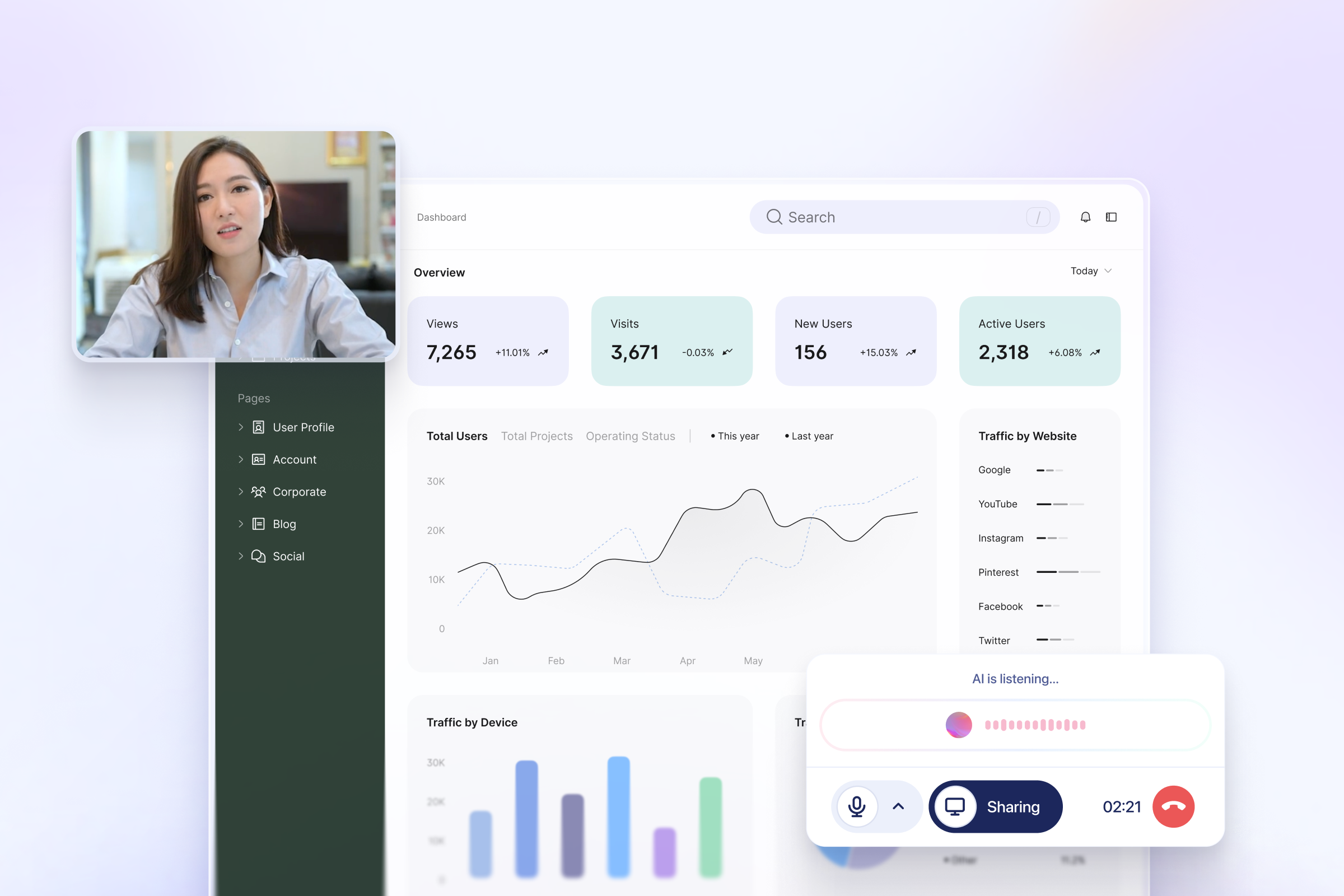
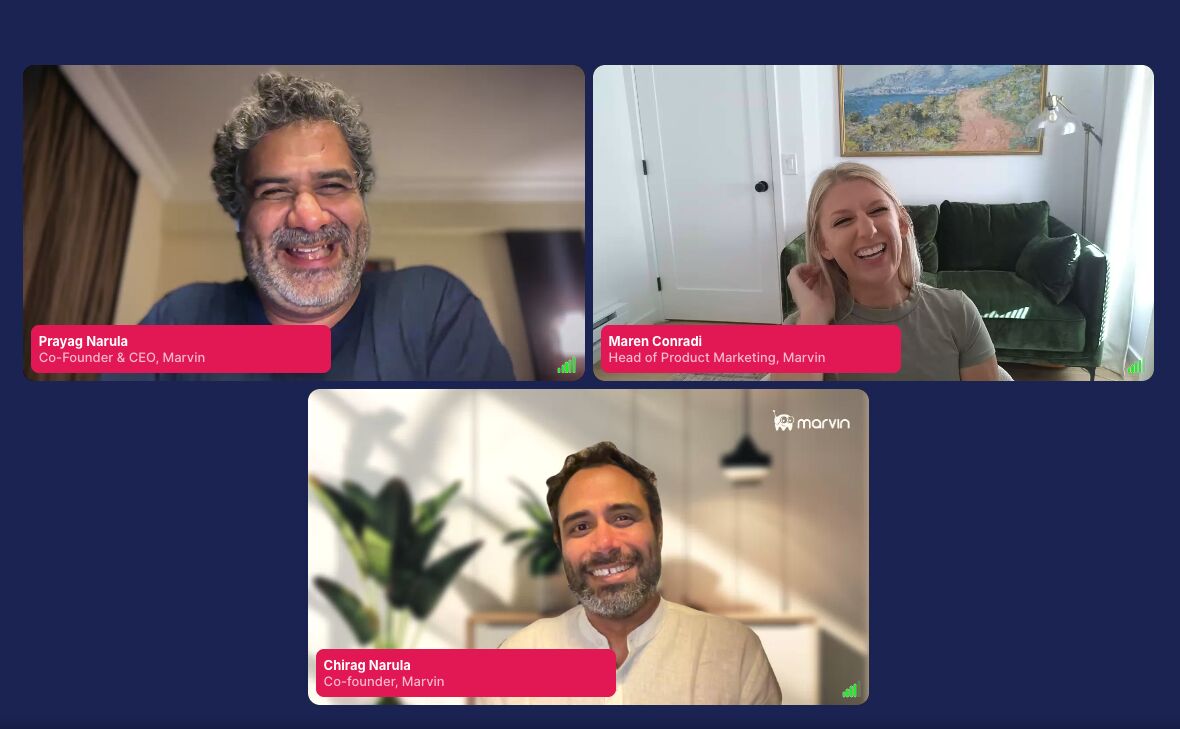
Marvin CEO and co-founder Prayag Narula hosted the conversation with Maren and Prayag’s brother and co-founder Chirag Narula, our Chief Design and Product Officer. Working with research, product, and marketing teams across the industry, Prayag sees one major shift. Teams are "moving from study-based research to a lot more always-on research." Marvin has been making that shift itself, using Live Intercept, our AI interviewer that talks with customers inside the product. Chirag demoed it live during the webinar.
That shift changes how teams learn from customers, so it's worth defining clearly.
What always-on research means
Always-on research is a continuous way of learning from customers. It runs inside the product, on the website, and across the customer journey. It captures feedback in the moment, with context, and sends it straight to the people building for those customers.
Maren calls it "a continuous bridge between the people who are building for an audience" and the people living the experience. That bridge has four defining traits:
- In the moment. Feedback arrives while the experience is happening, when memory is sharp.
- In context. Each response comes with who the customer is, what they were doing, and often what was on their screen.
- In the flow of work. Insights land where teams already work, like Slack or Teams, for everyone to see at once.
- Continuous. The conversation runs every day, between and alongside planned studies.
Planned studies still have a job. They answer the big strategic questions. Prayag sees most teams running "a combination of both," with more of the weight moving to continuous learning.
Why research needs are changing
Research has always run in cycles. Design a study, recruit, interview, analyze, present, then wait months to do it again. That rhythm worked when products shipped a few times a year. Three pressures are breaking it.
- Teams build faster than they learn. AI lets designers, PMs, and engineers put a prototype in front of customers in days. Chirag remembers when a good, reusable prototype took months. Now the bottleneck is getting the right eyes on what you've built.
- Feedback is too thin to act on. When customers do speak up, teams often can't tell what they mean. At Blinkit, India's answer to Instacart, shoppers called Chirag's app "confusing." Customers use words that "don't really mean much to the design or product teams," he said. He couldn't follow up in the moment, and getting shoppers on a call later was hard. So teams guess, or comb through session recordings to piece together what went wrong. And that's if they hear anything at all.
- Customer signals are scattered. Teams that want to make customer-informed decisions may struggle to find the information they need, as most customer feedback is spread across the organization in places like support tickets, NPS surveys, sales calls, and CSM calls. Each channel tells part of the story, and none of it reaches everyone.
Always-on research answers all three. It keeps learning at the pace of building, adds depth to every signal, and puts what customers say where the whole team can see it.
What we learned running it ourselves
We've been running always-on research inside Marvin's own product with Live Intercept, and it has reshaped how we work. "It has literally changed the way we have been building product," Prayag said.
Where we listen. We placed AI-moderated conversations at moments that matter: the launch of our new navigation, inside our new Ask AI, and on each new customer's 30th day. Any user can currently jump in from a "give feedback" button on the main navigation.
Who hears it. The moment feedback is submitted, the recording lands in Slack. Anyone inside the company in that Slack channel gets notified and sees a link to the video. Prayag says it pulls the whole company toward improving the same experiences.
How much we hear. The volume surprised us. The "give feedback" button alone brought in 250 interviews in its first month. Prayag says we've run more interviews in the past 45 days than in the company's entire history before that. Most button conversations are short, often under two minutes.
What changed. Our product team now puts beta features in front of customers early and hears back fast. Chirag says that helps them iterate quicker, or shut an idea down when customers don't want it. And so far, nobody has complained that the conversations feel intrusive.
Six practices for making always-on research work
1. Put the customer where work already happens. Maren calls Slack and Teams the great connector for companies, so research belongs there too. When every interview lands in a shared channel with a recording, the whole company hears the customer at once. Our go-to-market teams even started using the "give feedback" button to pass along what customers told them on calls. Maren loves what it does for company culture: "That is such a brilliant way to get people obsessed with what's happening in the product."
2. Round out scores and surveys with the why. Scores and surveys give you a response, but they rarely tell you why people felt that way. For the most part, they “close the door,” as Maren described it, once the customer answers. A short conversation in the moment keeps that door open. You can ask follow-up questions while the experience is fresh, and logged-in customers arrive with context like their plan and account owner. A low NPS rating could mean a bad morning, a misread scale, or a real product problem. A two-minute conversation tells you which. It also lets you act right away: send the help article that clears up the confusion, or have the CSM follow up on a feature request. "That maybe won't change their score, but it might change their perception," Maren added.
3. Let people answer their way. Typing out feedback is work, so usually only the biggest fans and harshest critics bother. Always-on research lowers the barrier of entry. People can talk, share their screen, or answer on video, in whatever language they prefer, with auto-translation. Chirag calls screen share "such a gem" because customers point at the exact thing that bugs them. Maren sees language as the bigger win: "making sure that we design for everybody, not just a few."
4. Match the ask to the moment. Each moment in the customer journey calls for a different kind of ask. Mid-task, an interruption feels intrusive, so offer an optional feedback button and let people come to you. At a natural inflection point, like a customer's 30th day, a direct invitation feels welcome. Let the moment set the length, too. Chirag says quick in-flow conversations work in under two minutes. When people opt into a full AI-moderated interview, 15–20 minutes is comfortable, and fatigue sets in past 30. Prayag's rule of thumb: "If you're breaking the flow, if you're being a little bit intrusive, keep it short. But if you're priming people, you can go a lot longer."
5. Keep trust as volume grows. Hundreds of conversations a month is more than anyone can watch one by one. That's when trust in the findings gets tested. Use AI to surface themes across the volume, and make sure every theme links back to the conversations behind it, so anyone can check the source. Then look for the same themes in other channels. Maren says the value comes from bringing intercepts together with support tickets, sales calls, and CSM calls. When a theme shows up in several places, teams can prioritize with confidence. It's also how "the loudest customer, or the person with the most feedback, doesn't take up most of the energy," she said.
6. Bring your research standards with you. Quick, in-the-moment feedback is still research, and it deserves the same care as a scheduled interview. If you redact PII in standard interviews, redact it in intercepts, too. The same goes for consent, data retention, and who can see recordings. Build those rules in before the first conversation goes live. In Marvin, intercepts follow the same protections as the rest of your research: automatic PII redaction across audio, text, and video, which stays in place when people query the data later, and voice and face masking help teams in regulated industries stay compliant.
Beyond the product
Maren's marketing lens widens the map. Always-on research can sit on your website, pricing page, and help content, too. For example, she would love to ask users why they spent four minutes on the pricing page and then left.
Win-loss is another natural fit. To be polite in a conversation with a human interviewer, buyers often soften the truth. With AI, Maren says, "they are ruthlessly honest."
Launches benefit as well. Feedback from beta programs doubles as a source of customer testimonials. And for product marketers, a steady stream of customers describing their pain in their own words is exactly what good messaging is built from.
Keep the chair filled
The empty chair was always a reminder. But now always-on research gives customers a standing seat wherever decisions get made. For research teams, that makes the job bigger: designing the system that listens, and making sure everything it hears is worth trusting.
Chirag spent years wishing he could ask shoppers what "confusing" meant. Today that answer can be a two-minute conversation away. Start with one moment in your customer journey where you've always wondered why, and put a conversation there.
See Marvin AI in action
Want to spend less time on logistics and more on strategy? Book a free, personalized demo now!