

Free customer research tool

Should you build or buy your research repository?

Answer 12 questions, and get a defensible build, buy, or hybrid recommendation for your research stack in under five minutes, grounded in 90 vetted industry sources.
How it works

How the build vs. buy assessment works

You answer questions across six categories, from your current setup to your AI readiness. Then the tool applies a set of decision rules to reach your recommendation.

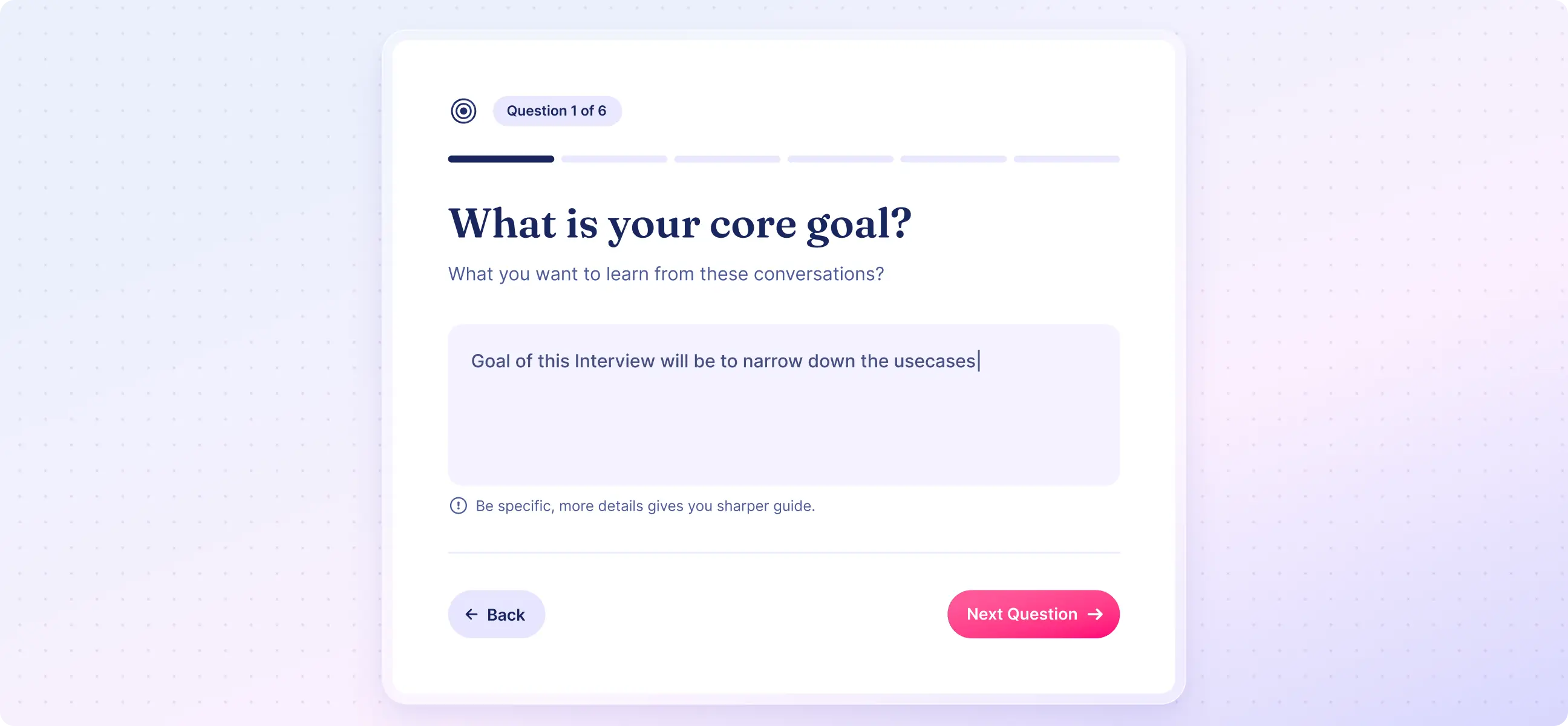
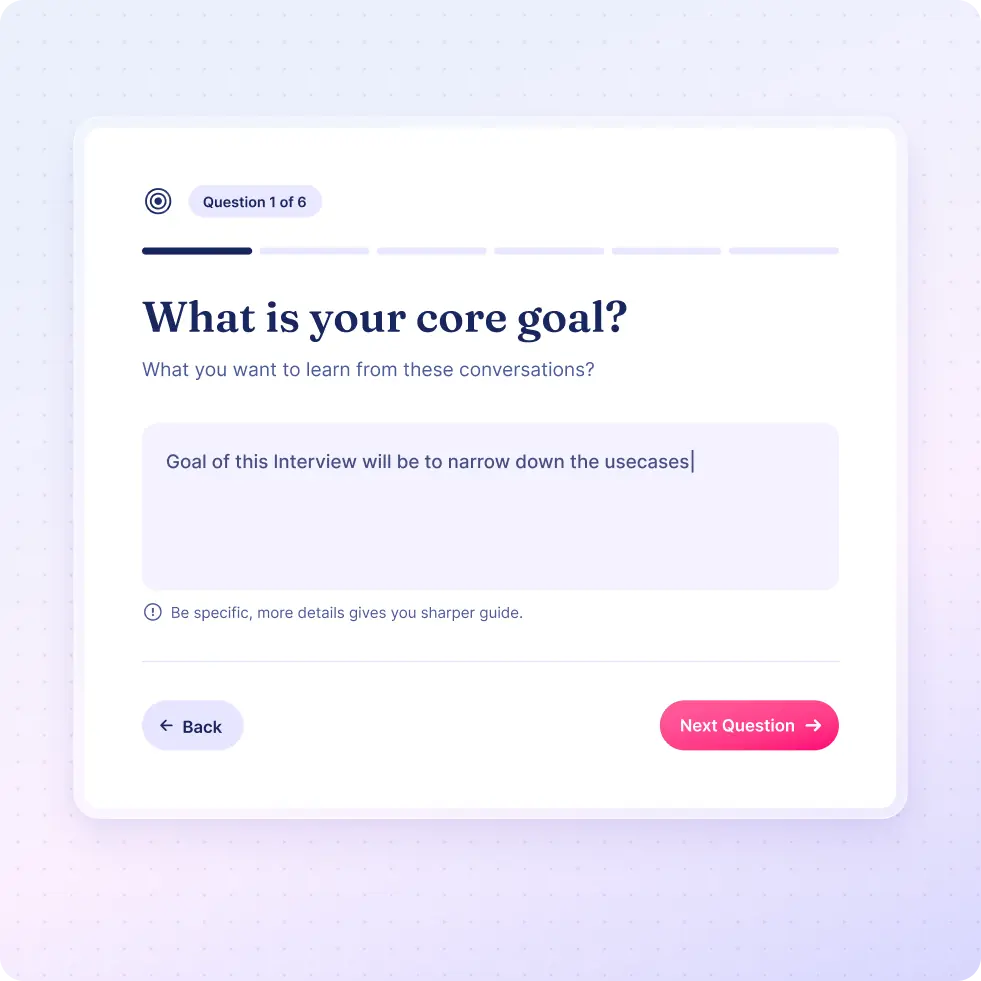
Answer 12 questions about your team

Start the assessment
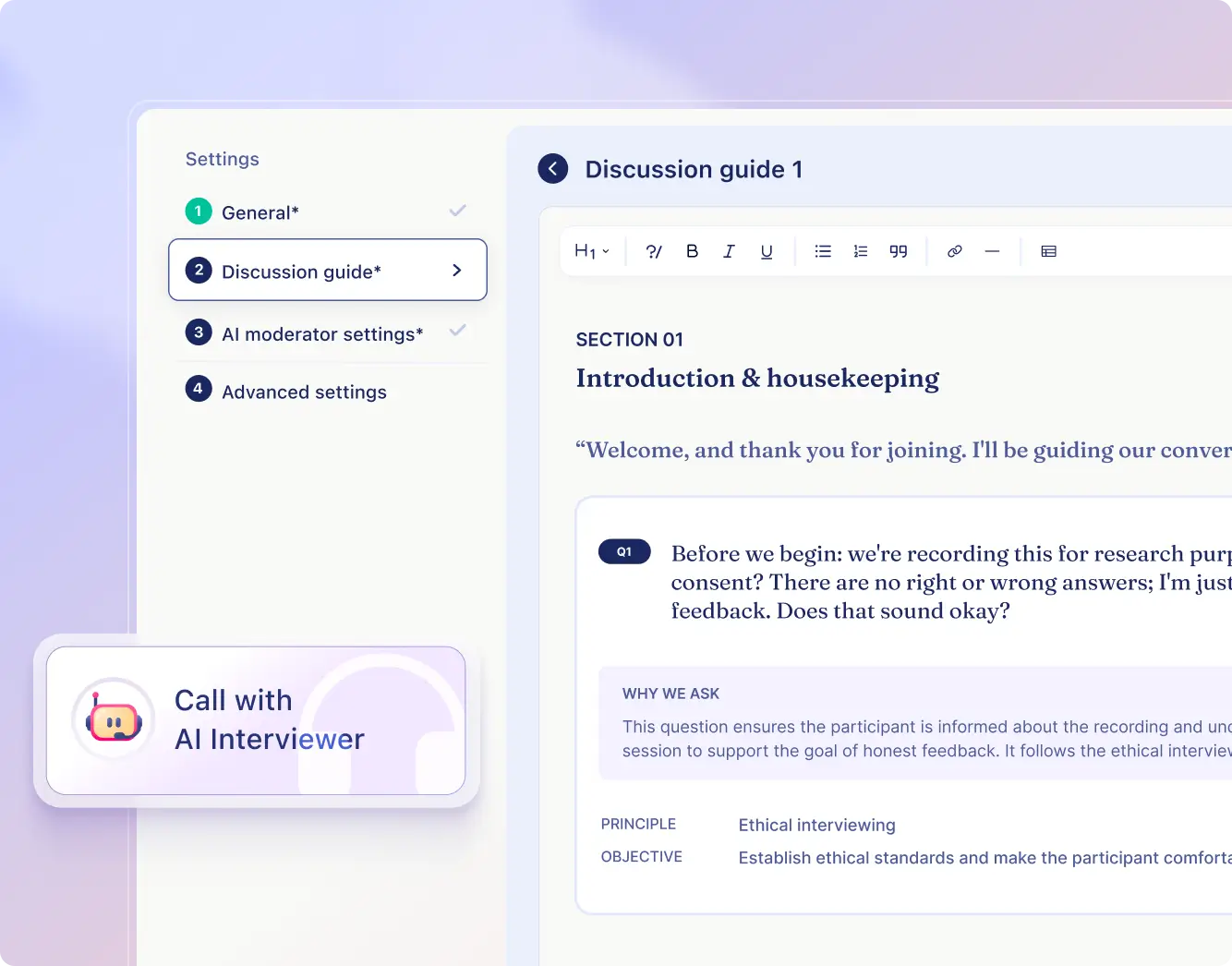
Answer questions including your current setup and your AI readiness.
Each answer appears beside you in plain language, so you can see what you have told us.
The last question is open text, where you describe the workarounds slowing your team down.
Get a verdict with the reasoning behind it

See your verdict
Add your name and work email, and the full result arrives on the next page.
You get a build, buy, or hybrid verdict, plus a breakdown across six factors.
Each factor shows which way it leans and why, based on the answers you gave.

Deliver the decision to your team

Get your recommendation
Copy the ready-made summary and paste it into a doc or a message.
Finance gets the budget reasoning, and engineering gets a clear question about maintenance.
Every point traces back to your own answers, so the decision holds up under questions.

Frequently asked questions

No. Anyone weighing whether to build or buy a way to collect and analyze customer insight can use it, whether that’s product, design, marketing, customer success, or market research teams. The questions on the build vs buy assessment ask about your budget, your timeline, who would maintain the tool, and how sensitive your data is. Those factors apply to any team mentioned above.

The rules come from a curated library of 90 vetted sources on build versus buy practice. AI reads your written answer to confirm the direction. Use the result to open the budget conversation with finance, or to ask engineering whether they can commit to maintaining a custom tool for the next few years.

The build vs buy decision is different for research teams because of what the tool has to store. Research data is video, audio, and transcripts. A custom build has to handle transcription, tagging, and search across all of it. Participant recordings also carry consent and privacy obligations. That extra work is why research teams find building far more expensive than they expect.

Yes. Building wins when all six of these are true:

  • The way your team runs research is something competitors cannot copy.
  • No tool on the market does what you need it to do.
  • Someone's job includes maintaining the tool for the next three to five years.
  • That tool is documented well enough that a colleague could take over tomorrow.
  • Your research methods rarely change, so the code will not need constant rework.
  • You can wait a year or longer to have it running.

Teams that meet only some of these usually land on hybrid recommendations.

Most likely, yes. Marvin has more than 30 native integrations that cover research, product, support, sales, and marketing tools. An import API handles anything else you need. Slack and Salesforce connect natively with Marvin. There is also an MCP connector. AI tools like Claude and Figma Make can pull from your research while you work in them.

Most likely, yes. Marvin has more than 30 native integrations that cover research, product, support, sales, and marketing tools. An import API handles anything else you need. Slack and Salesforce connect natively with Marvin. There is also an MCP connector. AI tools like Claude and Figma Make can pull from your research while you work in them.

Yes. The free plan lets you start with no credit card required. Larger teams can request an enterprise trial instead, which includes onboarding support. If you want to see how it works for a team like yours first, our customer stories cover what changed after they switched to Marvin.

That depends on how many files you have and where they sit today. The bulk upload feature and direct connections to Notion, Confluence, and Google Drive bring most of it into HeyMarvin automatically. Our team maps the move out with you first. Agreeing on taxonomy (how to label everything) usually takes longer than shifting the files.

Yes. The free plan lets you start with no credit card required. Larger teams can request an enterprise trial instead, which includes onboarding support. If you want to see how it works for a team like yours first, our customer stories cover what changed after they switched to Marvin.

Next steps

If you decide to buy, here is what you get

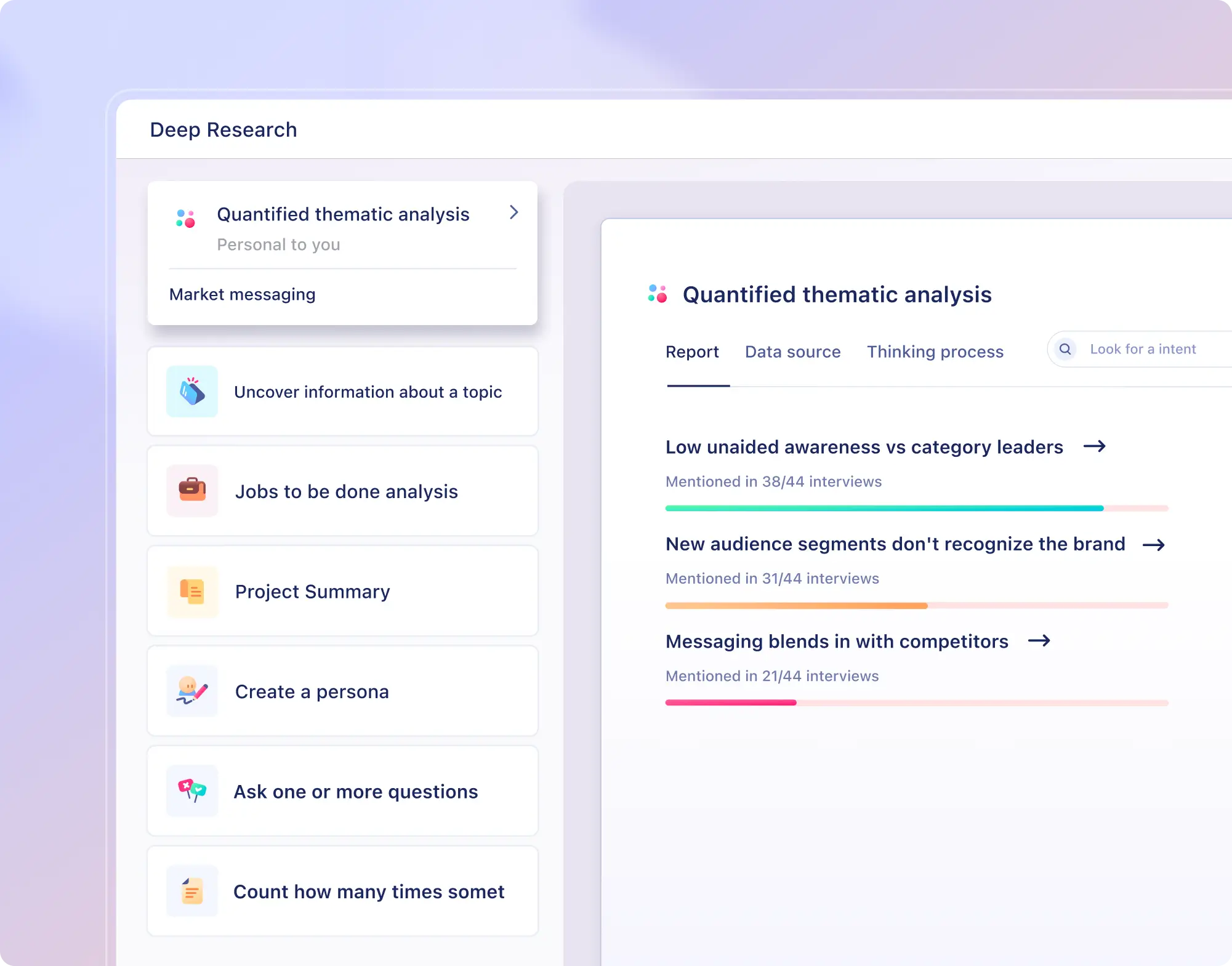
HeyMarvin does the jobs a custom tool would do. Store your research, answer questions about it, and analyze it, all in one place.

Stop guessing. Check out Marvin.

See how Marvin handles migration, integrations, security, and more for your team.