



ON-DEMAND VIRTUAL EVENT
Safe Ways to Use AI to Improve Your Research Workflows
The appropriate use of AI can vastly improve many parts of UX work.
But how do you know what's "appropriate"?
After researching this topic for years, Kate Moran of Nielsen Norman Group has some answers for you.
Join us as she shares her perspective of AI in UX, its limitations, and a not-so-distant future world of hyper-personalized experiences for everyone.
Discover key takeaways like...
💡 The potential for AI to transform UX research
💡 How you can use AI tools in UX research workflows, including best practices and cautionary tales
💡 The ethical considerations surrounding AI in UX research, such as data privacy and consent
💡 Plenty of blue-sky ideas and creative ways of using AI both today and in the future
Speaker Spotlight

Kate Moran
Kate Moran is Vice President of Research and Content at Nielsen Norman Group. She is a globally recognized UX expert who has trained over 10,000 professionals in diverse industries such as finance, healthcare, government, aerospace, and technology. With over 12 years of experience in UX research, Kate's expertise spans both qualitative and quantitative methods. Kate has discovered and published ground-breaking findings on interaction design, digital content, and information-seeking user behaviors.Kate's work is deeply informed by her background in information theory and design. Prior to joining NN/g, Kate worked at IBM and a design agency. She holds a Master's degree in Information Science with a specialization in Human-Computer Interaction from the University of North Carolina at Chapel Hill.

Prayag Narula
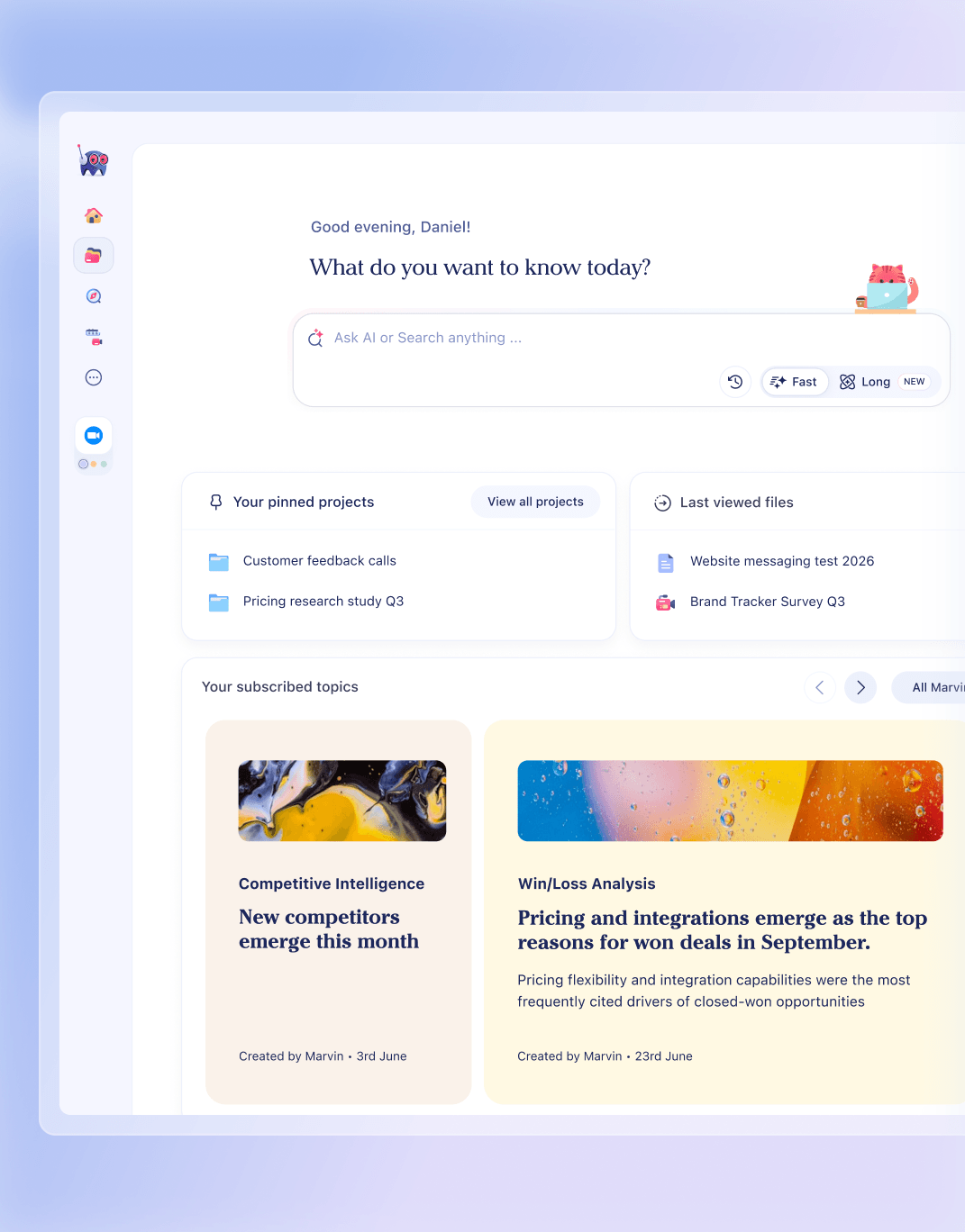
Prayag Narula is co-founder and CEO of Marvin, an AI-native customer insights platform trusted by Fortune 500 companies to better understand their customers. Marvin brings together AI-powered research tools, an intelligent knowledge repository, and agentic AI to help teams connect with their users, learn faster, and make better decisions together.
Prayag has spent his career at the intersection of research, technology, and entrepreneurship. Before Marvin, he co-founded and led LeadGenius. He previously worked as a researcher at the University of Helsinki, studied at UC Berkeley’s School of Information, and published more than a dozen papers on human-computer interaction, user-centered design, and artificial intelligence.